The answer exists, but it's buried
Parents know the book covers their problem. Finding the part that fits a 26-month-old who refuses the potty after a good first week is the hard part.
Case study · AI chatbot
Prologue turns an expert's books, seminars and know-how into an AI companion that people pay to talk to. The first one is Oh Crap! Chat, built with author Jamie Glowacki on her potty-training method. A parent who is stuck at bedtime asks a question and gets Jamie's approach for their child, without rereading the book.
For everyone
Parents in the middle of potty training have questions at odd hours. The answers are in Jamie Glowacki's book, Oh Crap! Potty Training, but nobody wants to flip through a book at 9 p.m. with a toddler who just had an accident on the rug.
So we put the book behind a chat window. Parents ask in their own words, and the bot answers with Jamie's method for their child's age and situation. When a question needs a specialist, like poop withholding, it says so and points them to the right help.
Parents buy a pass for 24 hours, 3 days or 10 days. There is no subscription to cancel. More than 700 parents have paid so far, and over 400 are active users.
Jamie's book and teaching, loaded into a private knowledge base.
Answers from that material only, in plain words, at any hour.
Pays for a short pass, gets help, and the author earns from it.
For founders and CEOs
What the business needed, why it was built this way, and what it has returned so far.
Parents know the book covers their problem. Finding the part that fits a 26-month-old who refuses the potty after a good first week is the hard part.
Potty-training trouble happens at home, at bedtime and on weekends, when no consultant is on call.
Jamie can work with a few families at a time. Many more readers need the same guidance, fitted to their child.
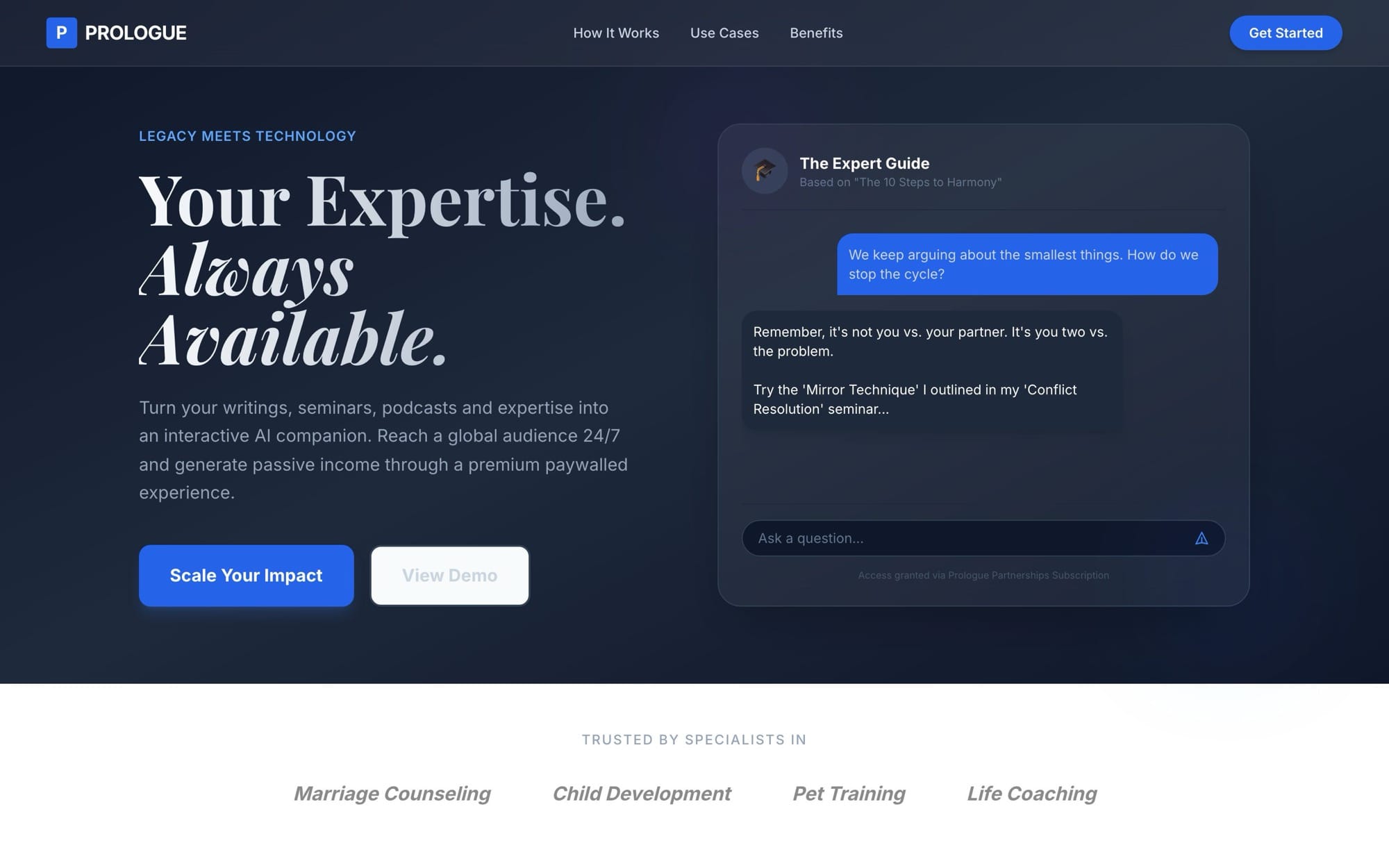
Prologue's idea is that an author's knowledge is worth more when readers can ask it questions. Each partner author gets a chatbot that learns only from their own material, and the author's audience pays to use it.
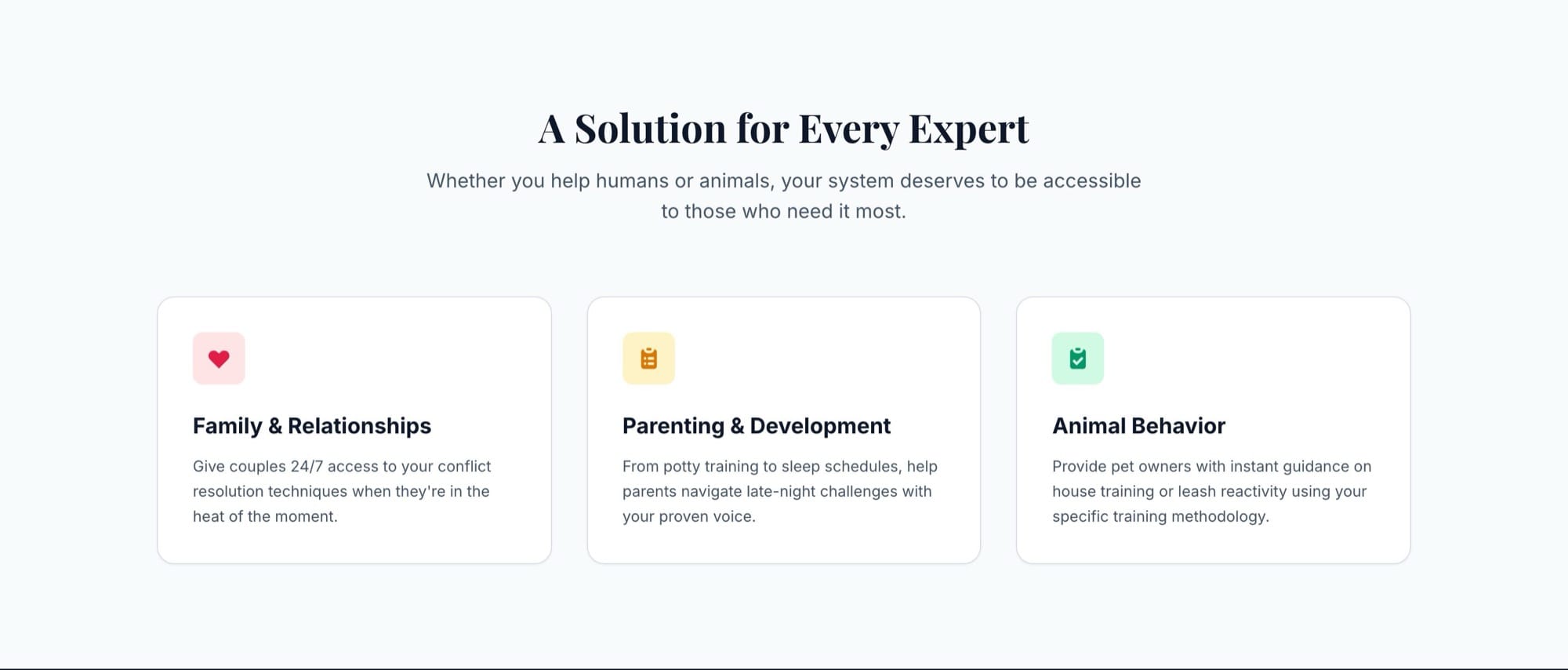
We started with one author and one subject on purpose. Potty training has a clear age range (1 to 4, with a sweet spot of 20 to 30 months), parents with urgent questions, and an author whose method people already trust. If it worked there, the same platform could serve the other fields Prologue lists: relationships, child development, pet training and coaching.
The admin side was built for that next step from day one. It already manages partner authors, their teams, bot presets, customers and revenue, so adding the second author is setup work, and the platform itself stays the same.
Parents pay once for a block of time. Potty training is an intense few days and then the odd check-in, so a short pass fits how people actually use it, and nobody has to remember to cancel anything.
Authors bring their audience. Prologue brings the product, the paywall and the marketing.
Prices from the Oh Crap! Chat checkout page. The 3-day pass is marked best value.
It took about a year of building to launch. Since then, more than 700 parents have paid for access, and over 400 of them are active users.
For Prologue, that settles the main question: parents will pay for an author's method in chat form. The next step is more authors, each with their own bot, on the same platform.
of 700+ paying customers are active users
For engineers and technical leads
How the system answers from one author's material only, sells time-limited access, and ships changes without breaking things for parents who have paid.
The parent opens the chat in the browser. Cloudflare sits in front of everything and handles DNS, caching and filtering bad traffic.
Sign-in runs on Supabase, with Google, Apple or email. Payment runs on Stripe Checkout, and a webhook records which pass the parent bought and when it ends.
Each question goes to the API on Google Cloud, which checks the parent's pass first. Without a valid pass, the model is never called.
The API searches Pinecone for the passages from Jamie's material that best match the question, eight by default.
Gemini on Vertex AI writes the answer from those passages, the bot's instructions and the recent chat, and streams it back as it writes.
New material goes in through the admin dashboard. The file is kept in Google Cloud Storage, split into chunks, embedded and written to Pinecone, with live progress on screen and a check that every chunk arrived.
A general chatbot will make up potty-training advice that sounds confident. Here the model only sees passages pulled from Jamie's material, and each bot has its own instructions about scope. Topics the method leaves to specialists, such as poop and pee withholding, are named on the checkout page, and the bot points parents to specialist help for them.
A pass that runs out after 24 hours, 3 days or 10 days means access has to be checked again on every message. Stripe's webhook writes the pass and its end time, and the API checks it before any model call, so expired passes don't use the model.
Answers stream to the browser as Gemini writes them. The API has one time limit for the first words and another for the whole answer, and it retries with a growing delay when the model is busy, so a slow moment at Google turns into a short pause on screen.
Every bot has its own settings in the admin dashboard: Gemini model, region, temperature, how many passages to retrieve, how much chat history to keep, time limits and retries. Prologue can tune a bot for a new author without a code change.
Prologue promises authors that their content is never shared with anyone else. Each bot reads only its own author's material, and partner authors and their team members have their own logins for their bots, customers and revenue.
Gemini is billed by usage, so the dashboard shows AI usage and an estimated daily cost next to revenue and transactions. A $10 pass only works as a business when you know what a conversation costs to answer.
Every change is built and tested on Google Cloud before it goes anywhere.
It runs first in a staging copy with Stripe in test mode, so payments and passes can be tried end to end.
A set of real parent questions is asked again to compare answers before release.
Only then is it promoted to production. The previous version stays ready to roll back to.
Keep reading
Next case study
SaaS · EdTech, Uganda
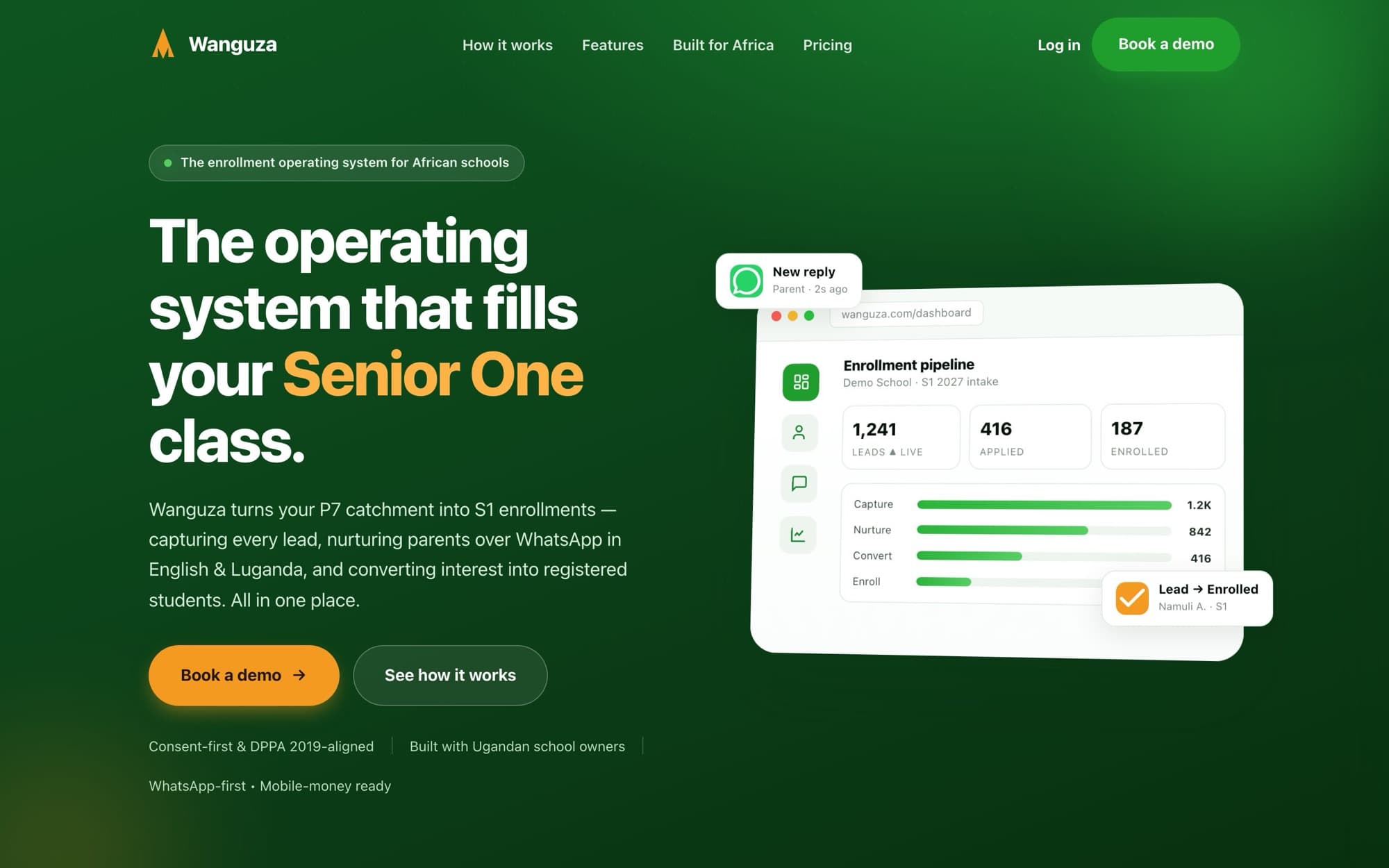
Wanguza captures every parent enquiry with consent, follows up on WhatsApp in English or Luganda, and shows schools which families are ready to enrol.
Enterprise · Home appliances
Partner shops send their numbers in their own files. The platform reads every layout, checks each line and saves it in one place, ready for maps, charts and forecasts that guide manufacturing.