Leads live in notebooks
Parent numbers end up on receipts, in exercise books and across three staff phones. Nobody owns the follow-up, so interested families go cold.
Case study · School admissions CRM
Private secondary schools in Uganda have to fill a Senior One class every year, and much of the interest they get from parents is lost between notebooks, staff phones and TikTok comments. Wanguza captures each enquiry with consent, follows up with parents on WhatsApp in English or Luganda, and shows the school which families are ready to enrol.
For everyone
A school's next intake is usually already interested. Parents comment on a TikTok, call a teacher or turn up at an open day. Without a system, most of those contacts end up in notebooks and never get a follow-up.
Wanguza gives each school a small website and QR codes that capture parent details with consent and record where each one came from. It then follows up on WhatsApp, or SMS for feature phones, in English or Luganda. It books school visits, takes applications and can collect seat deposits by mobile money.
The school sees one funnel, from first contact to registered student, plus which posts and open days actually filled seats. The first partner schools are already running their intake on it.
TikTok, open days, referrals and the school's own microsite.
Automatic journeys in English or Luganda, with SMS as backup.
Visits booked, applications tracked, students registered.
For founders and CEOs
The problem schools described, why the product looks the way it does, and how it pays for itself.
Parent numbers end up on receipts, in exercise books and across three staff phones. Nobody owns the follow-up, so interested families go cold.
A school video can get 31,000 views and hundreds of comments, and none of it reaches a system that books a visit.
Without tracking, a school can't tell which open day, post or referral brought students in, so each term's marketing spend is a guess.
Wanguza was designed with Ugandan school owners around how schools there actually recruit: WhatsApp, word of mouth and open days, with parents on low-cost phones and patchy data.
Most CRMs assume email, desktop users and card payments. Wanguza assumes WhatsApp, Luganda and mobile money, and it was built around Uganda's Data Protection and Privacy Act 2019 from the first version.
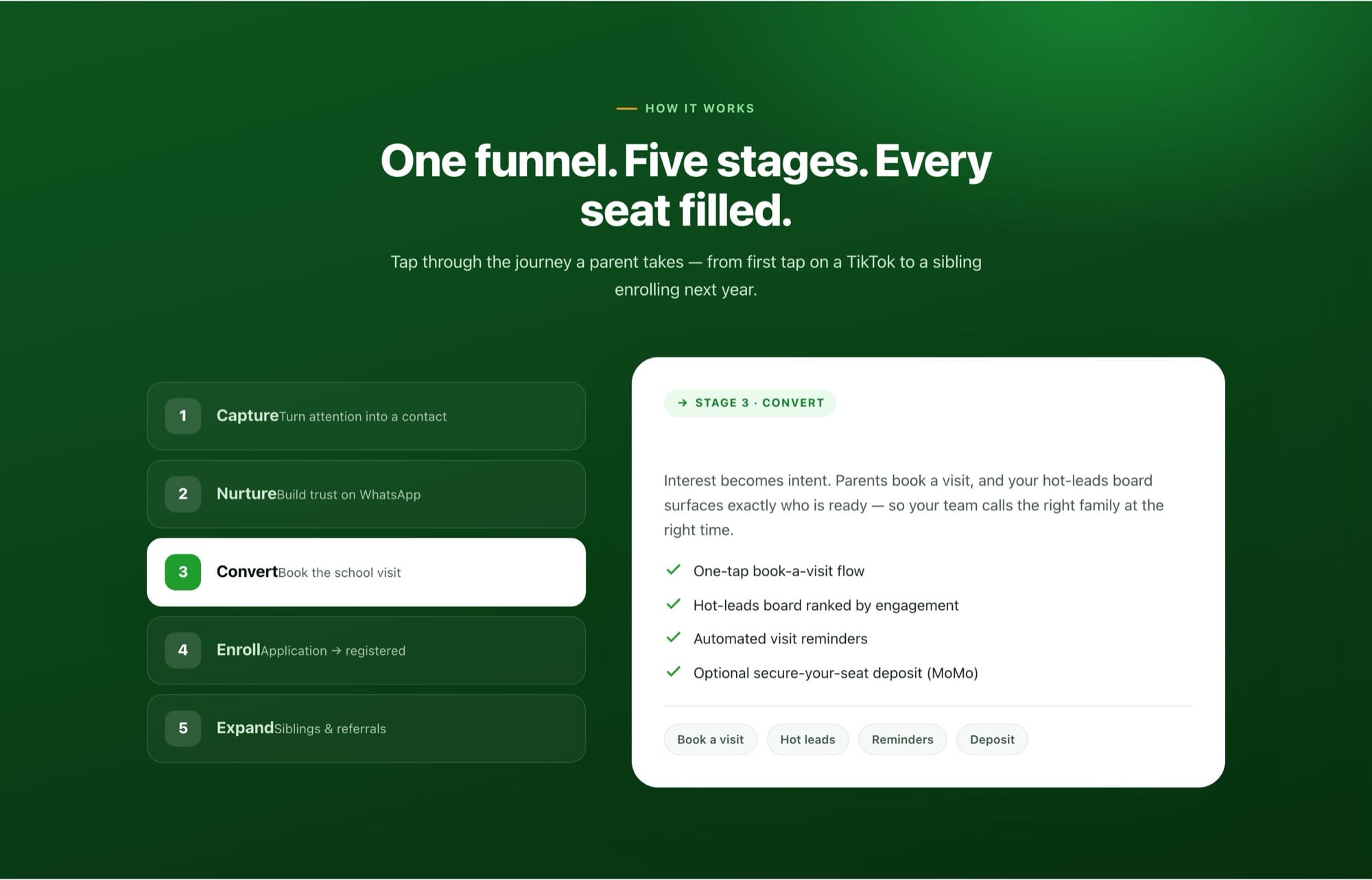
The product follows one funnel in five stages: capture the contact, nurture on WhatsApp, book the visit, turn the application into a registered student, then reach siblings and referrals.
A school can start free with up to 250 contacts. Paid plans add WhatsApp and SMS journeys, source tracking, AI Studio, mobile-money deposits and multi-campus tools. Founding schools keep founder pricing for 24 months.
The pitch to a school owner is simple arithmetic. Wanguza quotes fees of UGX 1M to 2.7M a term for one student, which comes to UGX 3M to 8.1M over a three-term year, against UGX 3.5M for a year of the Growth plan. An S1 student also usually stays four years.
Plan price and fee range from wanguza.com (founder pricing, excluding VAT). Three terms a year.
Wanguza is live. Schools can sign up and publish a microsite the same day, and the first partner schools are running their intake through it.
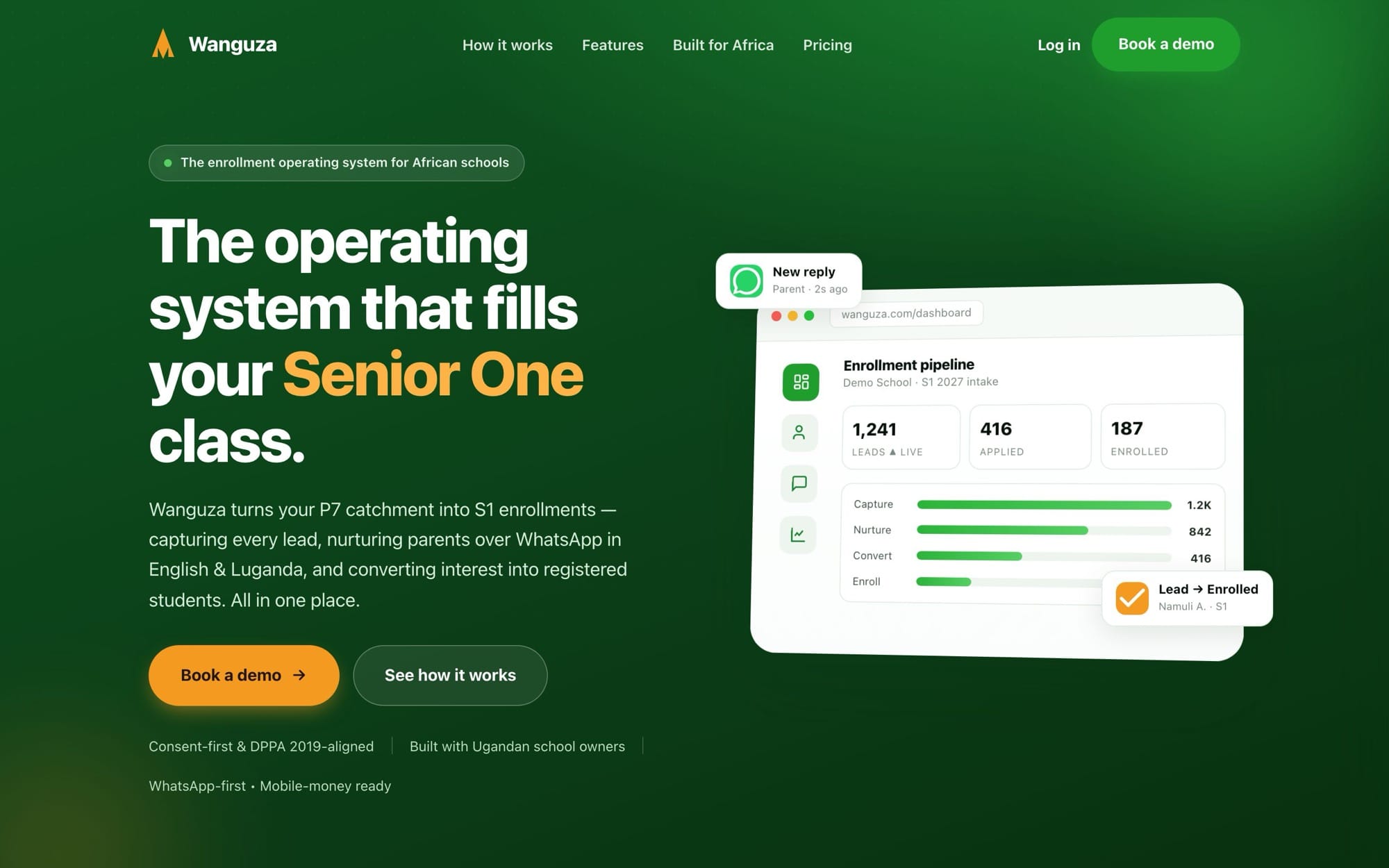
The funnel below is the demo school shown on wanguza.com. It shows how a school reads its intake at a glance: how many contacts came in, how many are talking, how many applied and how many enrolled.
Demo school, S1 2027 intake, as shown on wanguza.com. Sample data, not a client result.
For engineers and technical leads
A multi-tenant SaaS for many schools, a messaging engine for WhatsApp and SMS, and payments through mobile money, all built for cheap phones and patchy connections.
Parents meet the school on its Wanguza microsite or by scanning a QR code. Every link carries a source tag, so each lead arrives already labelled with where it came from.
The web app and the school dashboards run on Next.js, deployed on Vercel: pages from the edge, API routes as serverless functions in Vercel's us-east-1 region on AWS.
Consent is recorded per purpose with the lead. Each school's data sits in its own tenant, encrypted in transit, access-controlled and audit-logged.
Journeys send scheduled messages over WhatsApp Business, fall back to SMS for feature phones, and speak English or Luganda.
Replies and activity feed the hot-leads board, which ranks parents by how ready they look, so staff call the right family first.
Seat deposits go through a licensed processor for MTN MoMo, Airtel Money and cards. The money settles to the school, and Wanguza stores no payment credentials.
Parents never install anything. Everything reaches them on WhatsApp, with SMS for feature phones, and the public pages stay small enough to load on slow mobile data.
Journeys, templates and replies come in English and Luganda, so a reminder reaches each parent in the language they think in. Every new message is written twice.
Uganda's Data Protection and Privacy Act 2019 shaped the data model. Opt-ins are separate for each purpose and stored with the lead. Messages a parent started, like an application receipt, are service messages; marketing needs its own consent. Parents can see and delete their own data without calling the school.
Each school's data is isolated in its own tenant, access-controlled and audit-logged. Passwords are hashed and accounts lock after repeated failed sign-ins. The Network plan puts several campuses under one command centre.
Deposits run through a licensed processor for MTN MoMo, Airtel Money and cards. The money settles straight to the school and Wanguza never holds card or mobile-money credentials, which keeps the platform out of the money flow.
Every microsite link and QR code carries its own source tag. When a student registers, the school can trace them back to the TikTok, open day or referral that started it.
Every pull request gets its own preview deployment on Vercel, which works as a staging copy of the app.
Checks run on the preview, and the change is tried there with test schools and test messages.
Merging to main deploys to production on the edge, with the API on serverless functions.
If something goes wrong, the previous deployment comes back in one step, and the status page tells schools what is happening.
From the live product
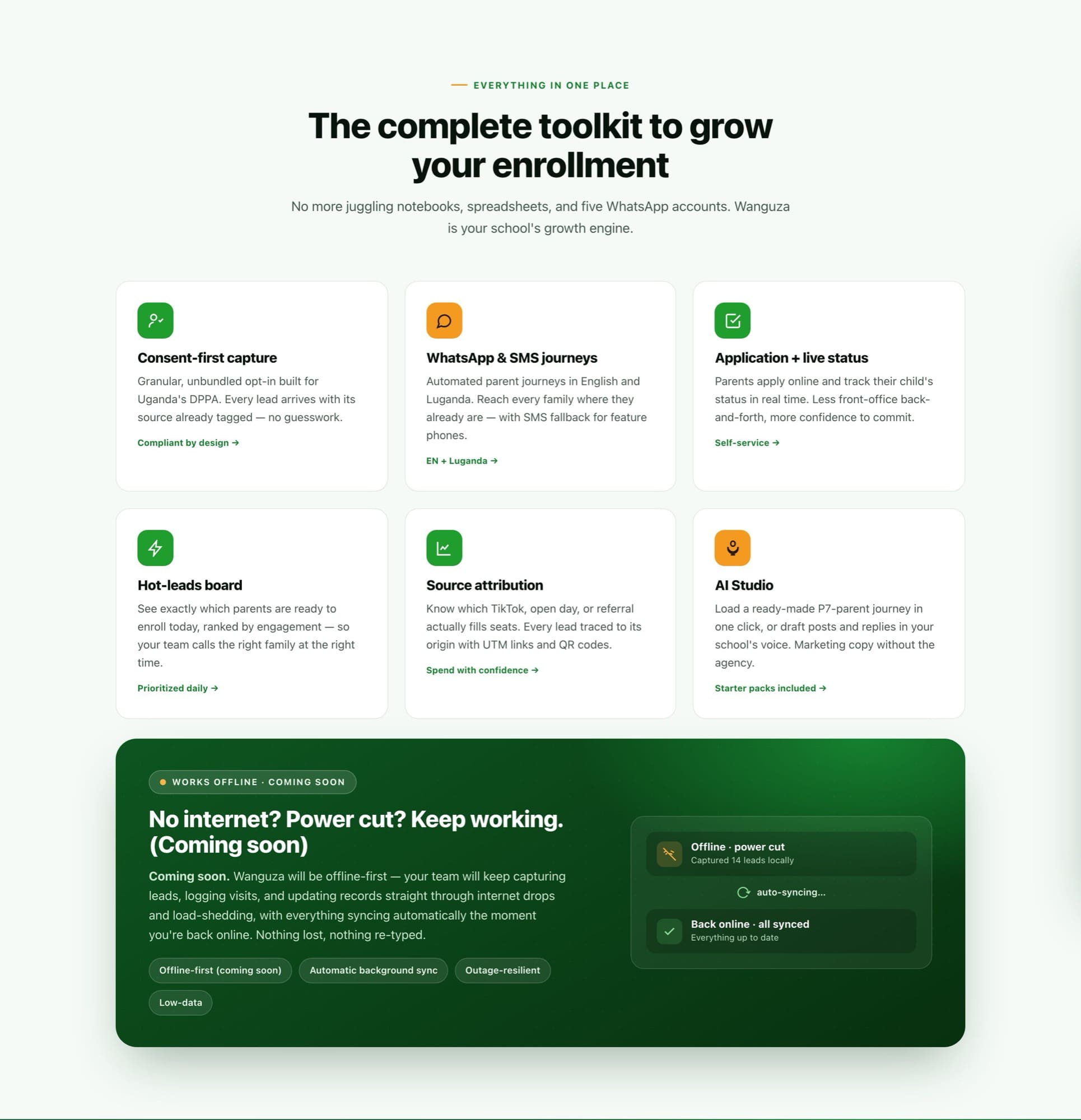
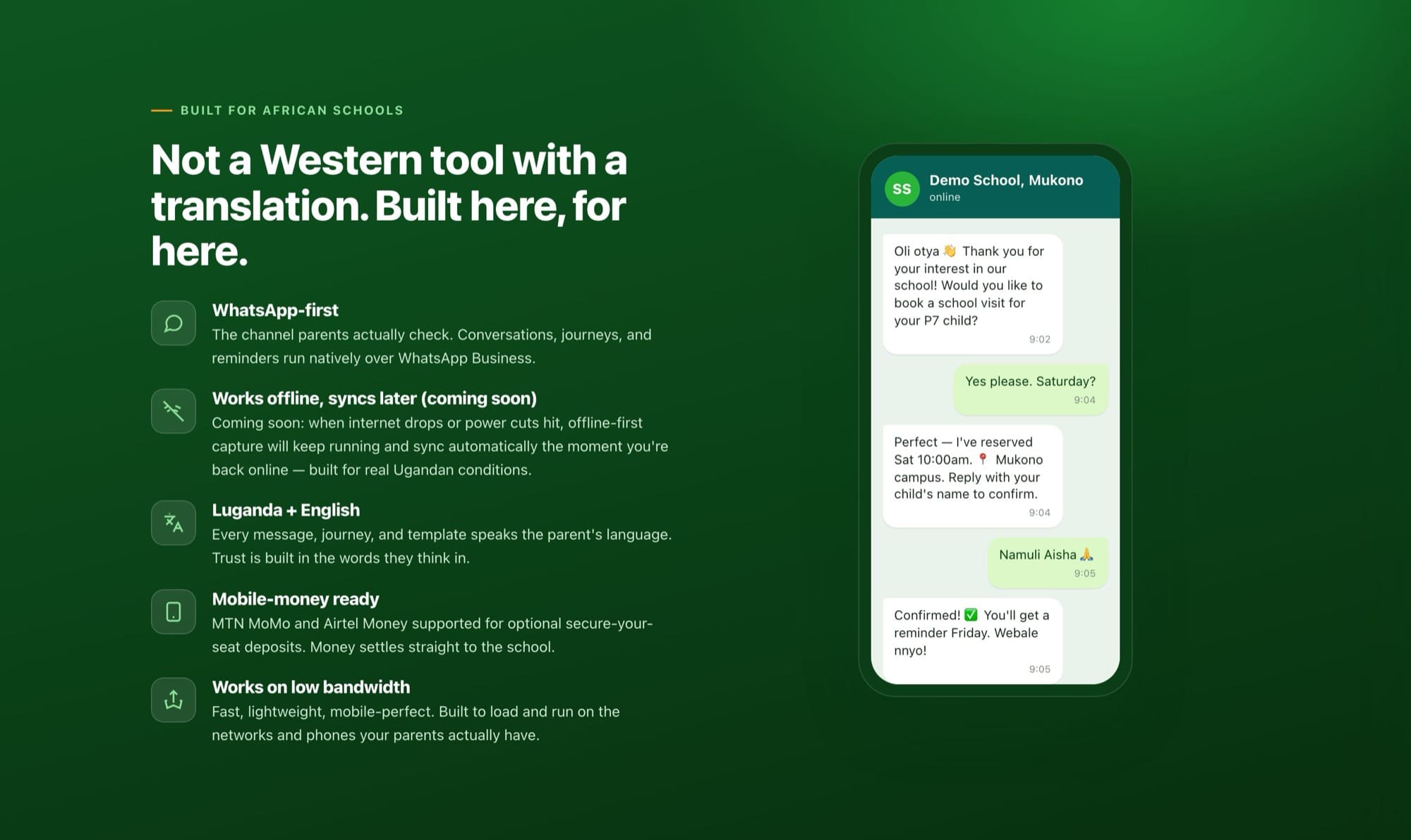
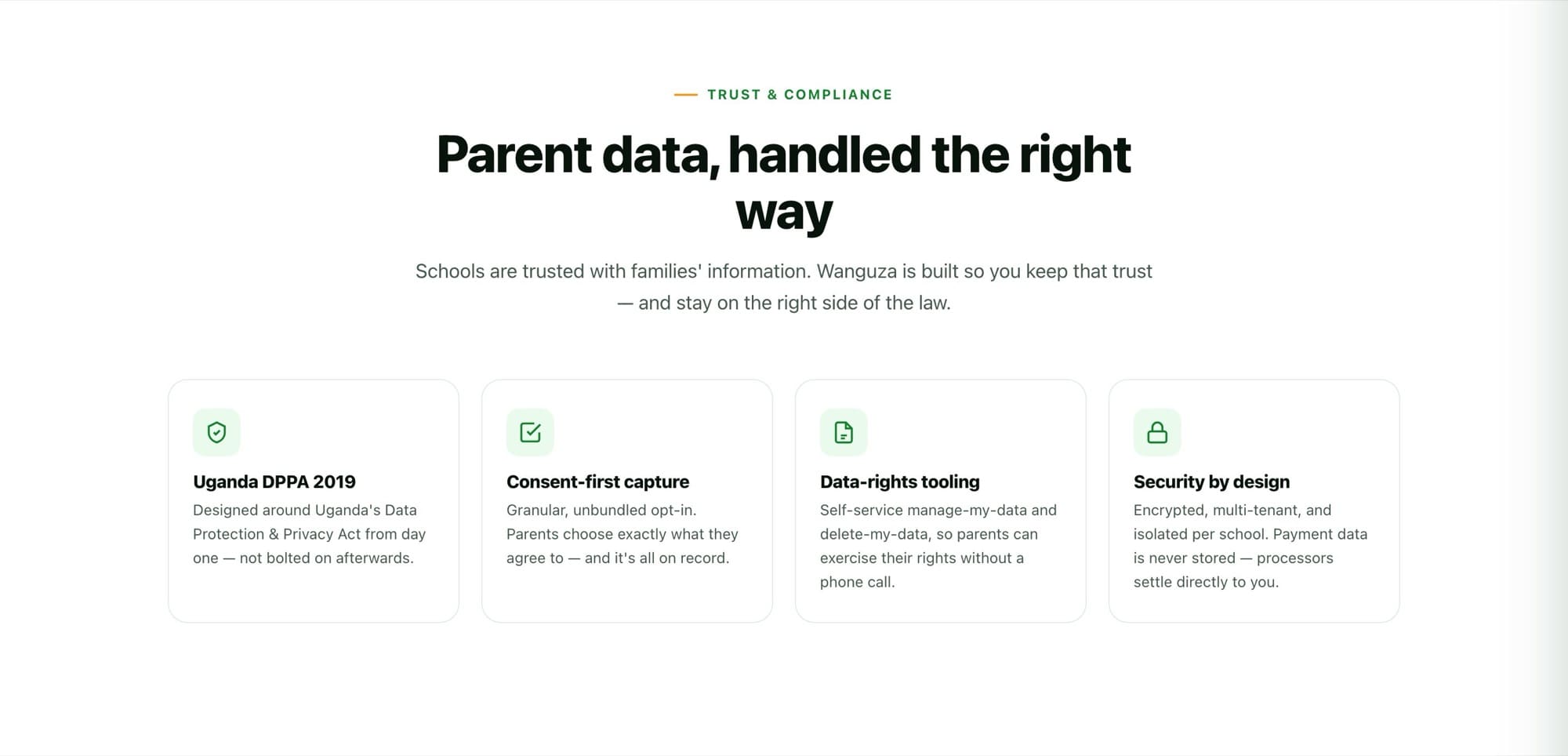
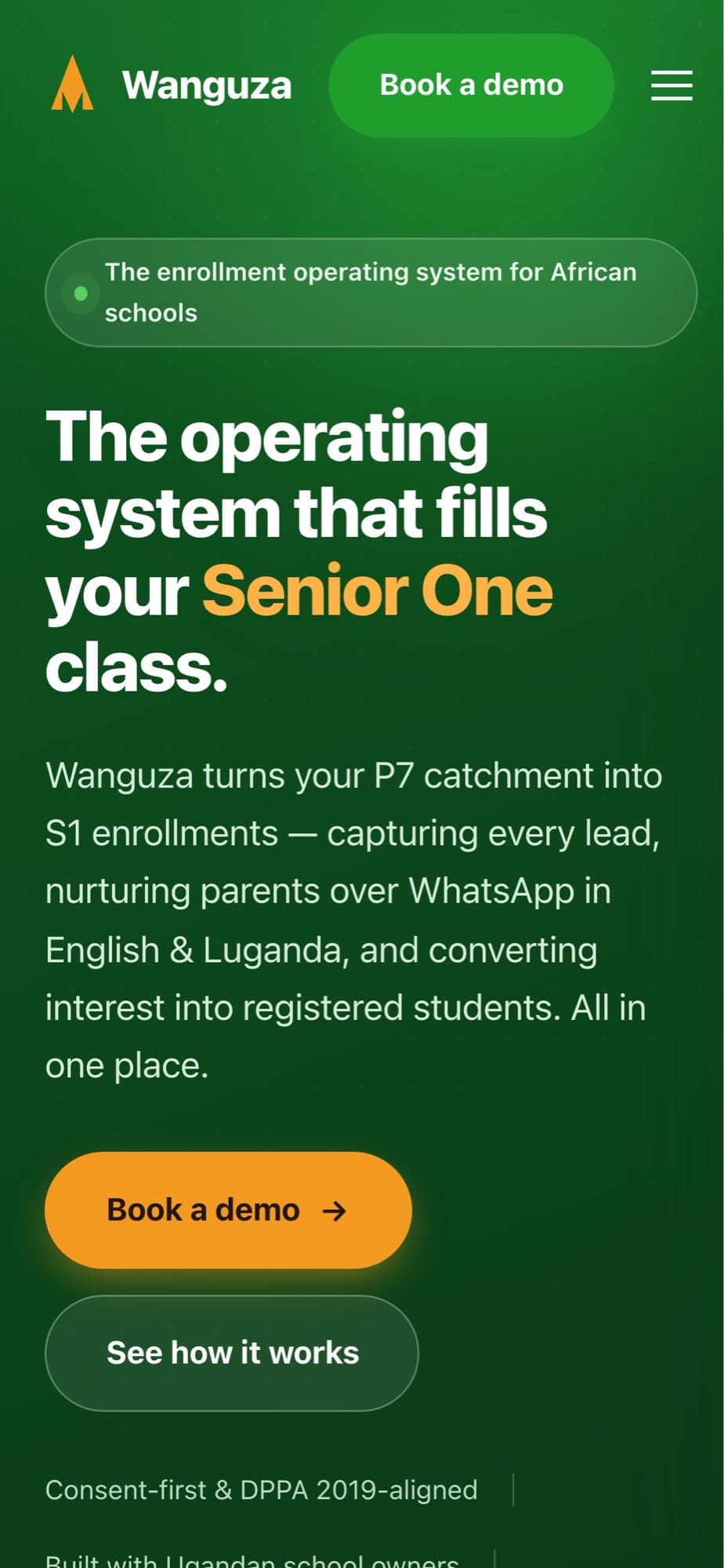
Screenshots from wanguza.com, October 2026.
Keep reading
Next case study
Enterprise · Home appliances
Partner shops send their numbers in their own files. The platform reads every layout, checks each line and saves it in one place, ready for maps, charts and forecasts that guide manufacturing.
Internal product · Agency operations
One login for LinkedIn outreach, email from your own domain, scheduled posts, clients and staff. Clients and employees get a portal that shows only their own part.